Know what rent is due, what's landed, and what's late.
Rent status and lease timelines, recomputed live from your ledger every time you look: nothing to schedule, nothing to sync by hand.
A rent board that's always current
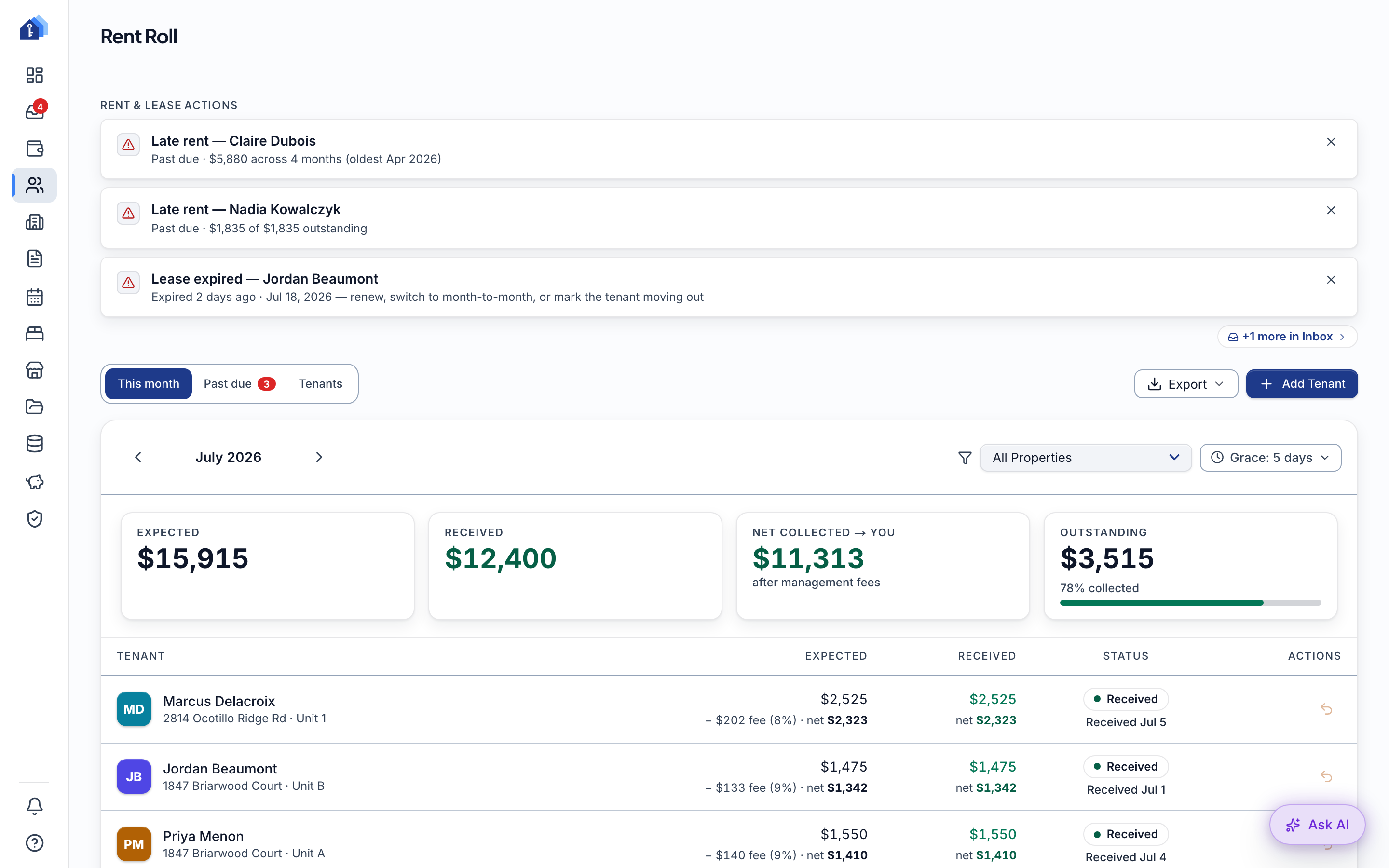
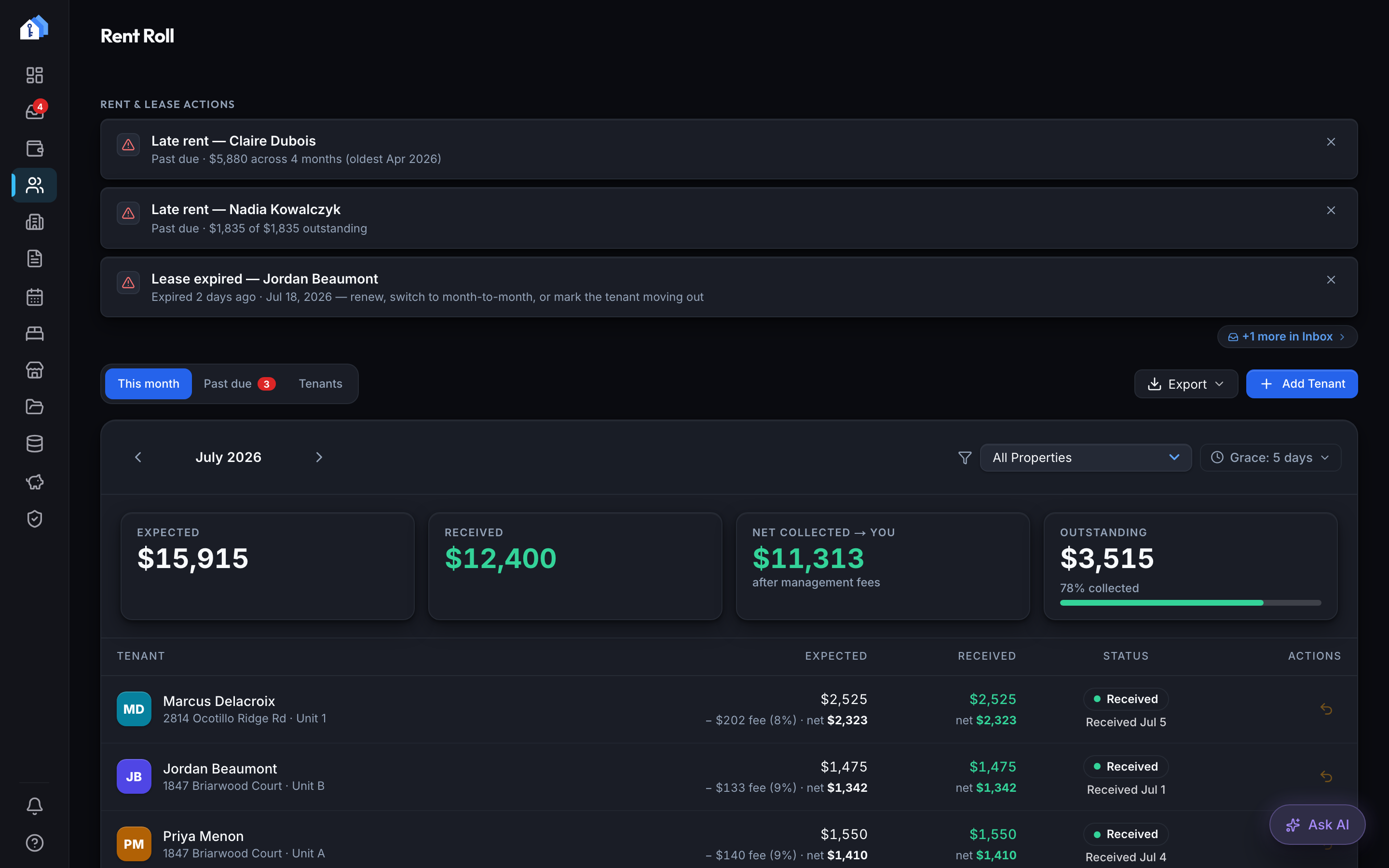
Every month the board works out what each lease owes, and Mark received records the payment the moment it actually lands.
- Expected, Received, and Outstanding totals for the month, live
- Only confirmed payments count toward NOI, so nothing inflates early
- Net-to-you shown after the management fee, on every row
Past-due rent that adds up, not resets
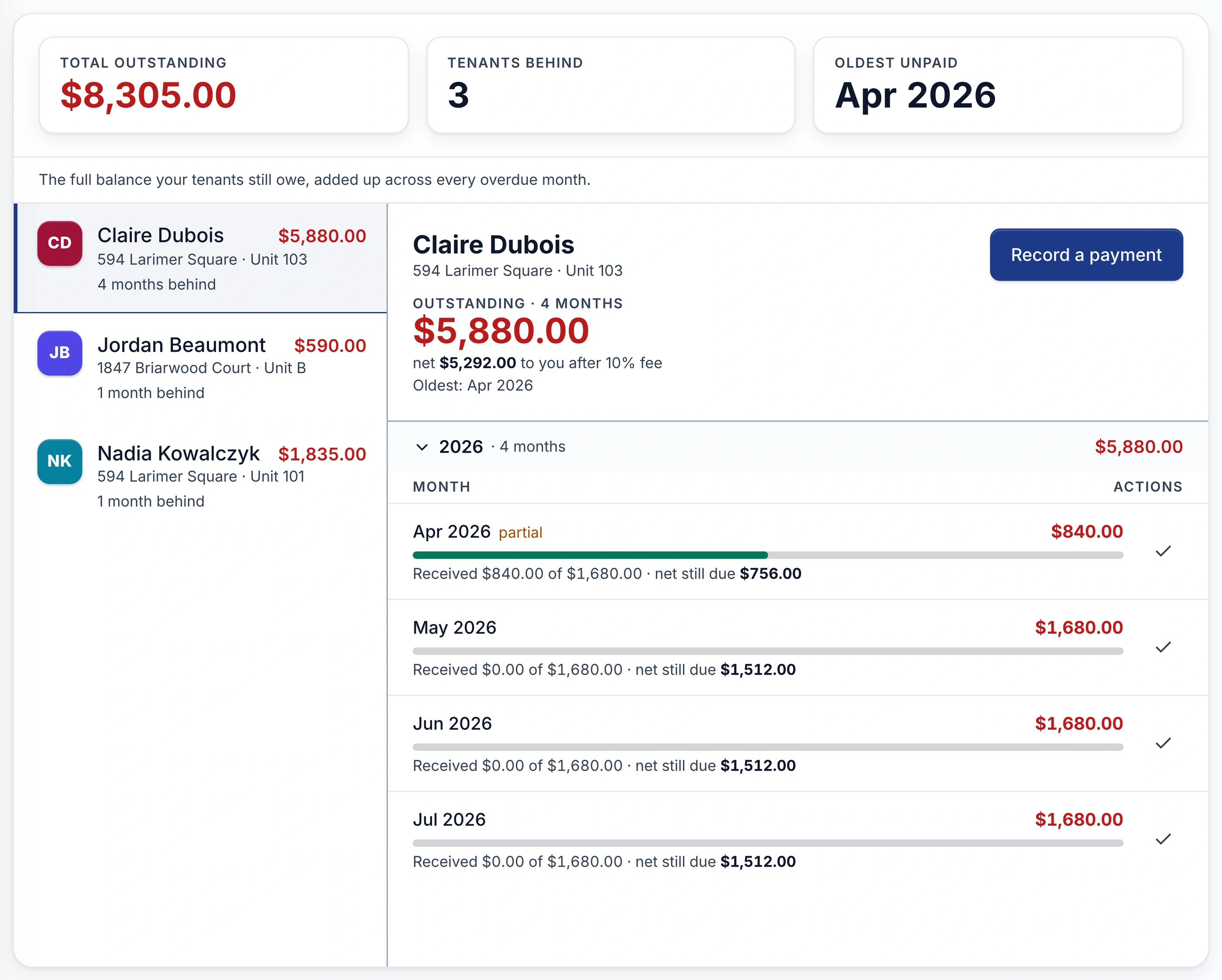
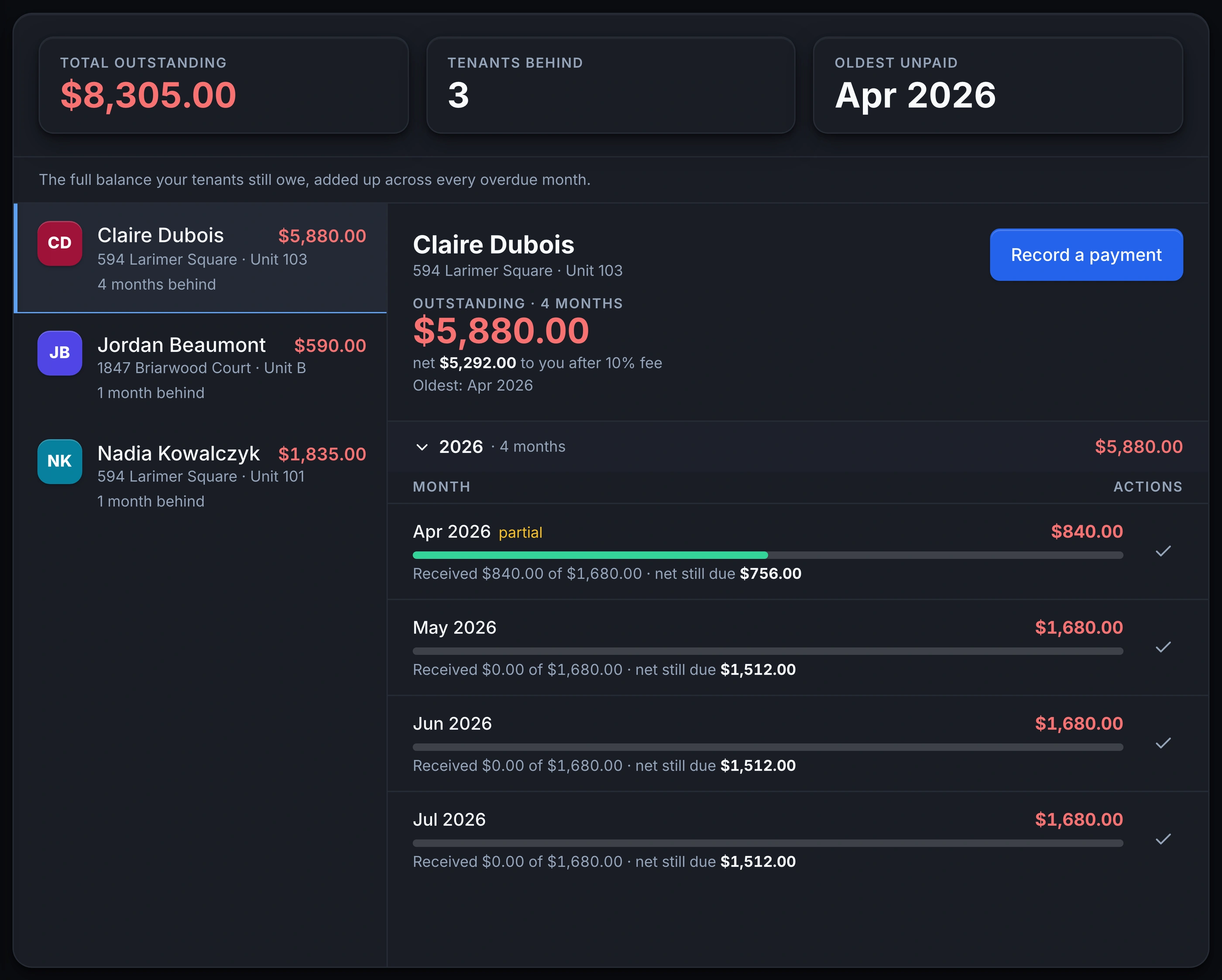
A missed month doesn't reset at the calendar; the Past Due view totals every overdue month per tenant, down to a partial payment's exact remainder.
- Outstanding balance totaled across every overdue month, per tenant
- Oldest unpaid month flagged, so you know how far behind
- A partial payment leaves the true remainder due, never rounded up
- A departed tenant's back-rent stays on Past Due
A year of every lease, before it lapses
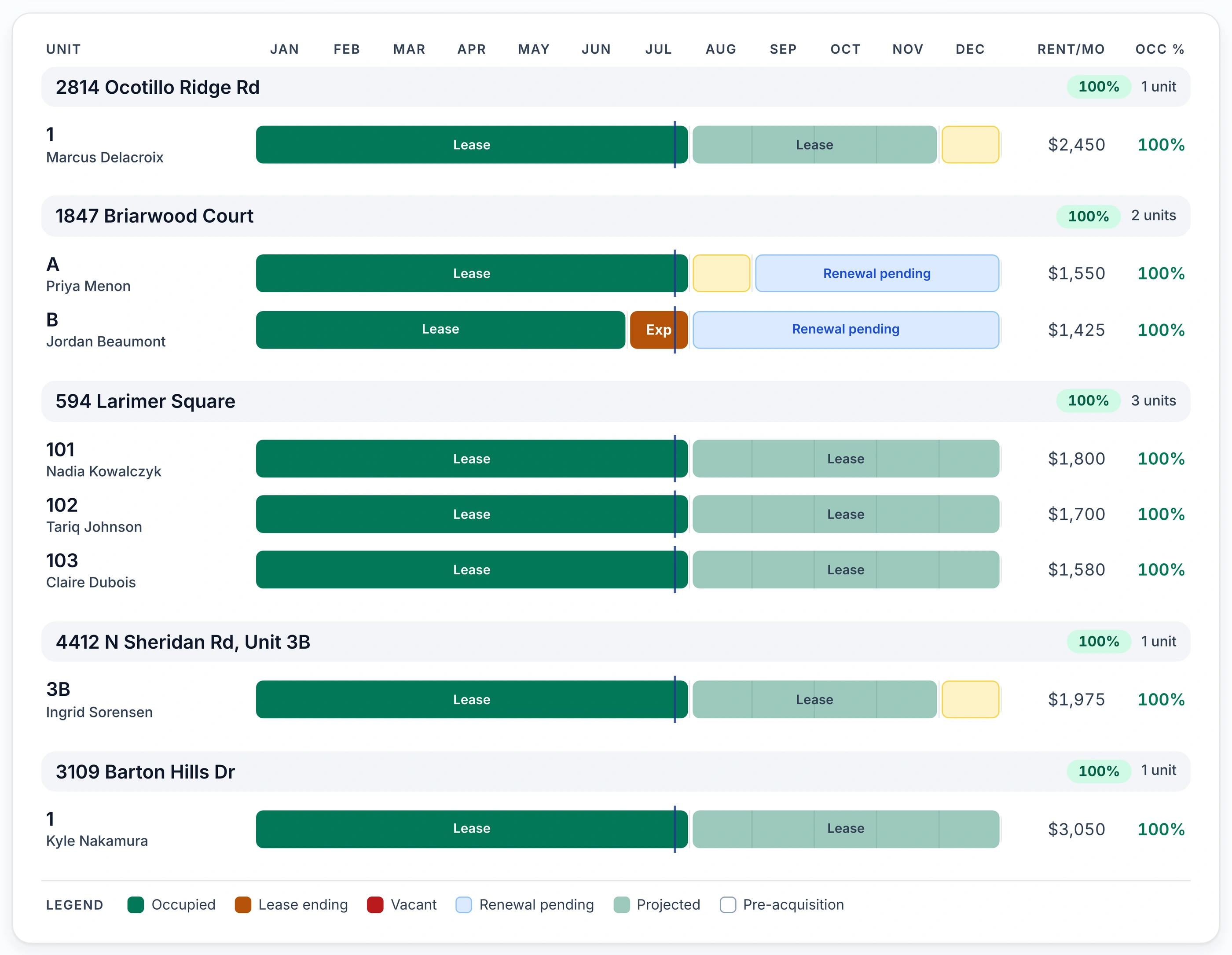
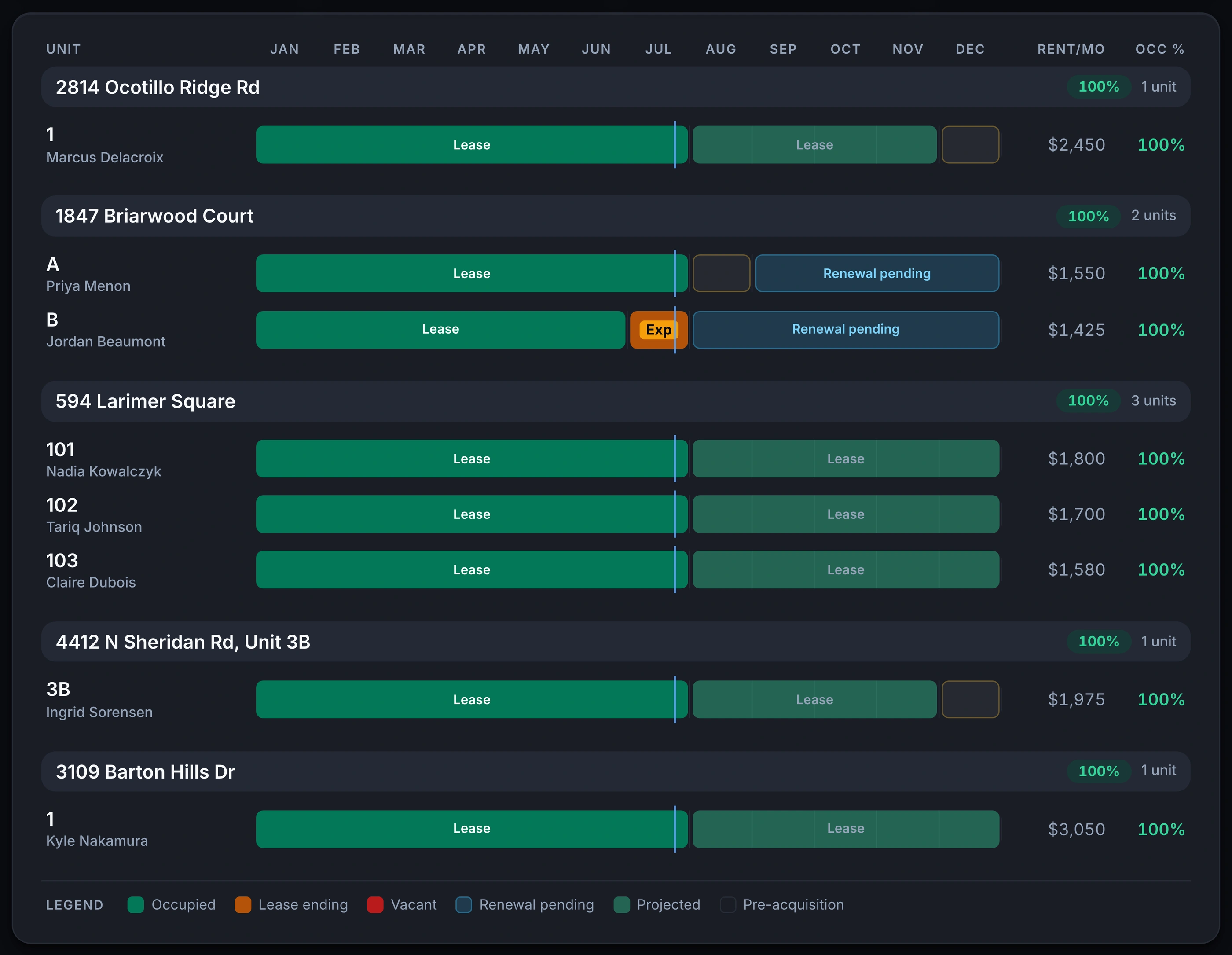
The Occupancy Timeline plots every unit's lease across the year, so a renewal or a vacancy is visible months ahead, not a surprise.
- Every unit's lease plotted month by month, portfolio-wide
- Leases ending flagged directly on the timeline, not buried
- Renewal pending shown once a renewal is underway
Management fees handled the same way every time
A property-management fee is a percentage of what actually came in that month: never a flat charge, never a cut of the whole roll.
- A 9% fee is 9% of what was collected
- Net-to-you shown on the same line as gross
- Past-due balances show net after fees too
What you get
Monthly rent board
expected, received, outstanding
Past-due, totaled across months
settle with one catch-up
Move-outs prorated to the day
auto-vacates when it passes
Rent Roll & Occupancy timeline
every lease, every vacancy
Market-rent gap analysisPro
money left on the table
Frequently asked questions
What happens if a tenant only pays part of their rent?
The payment is recorded as a partial. It settles the portion received and leaves the true remainder due, carried forward on Past Due until it's paid. Nothing is rounded up to "paid in full," and the shortfall is never written as a placeholder row before it actually happens.
Does a vacant unit count against my occupancy percentage?
Yes. Occupancy is recomputed live from your actual units, occupied versus total, across your whole portfolio. It isn't a figure you update by hand when something changes.
How does a lease move from "lease ending" to "renewal pending" on the timeline?
It's flagged automatically as the end date approaches. Once you've started the renewal conversation, mark it in progress and that unit's bar switches to Renewal pending until the new lease is signed. Nothing has to live in a separate note or spreadsheet.
If a tenant moves out still owing rent, does that debt disappear?
No. Their unpaid back-rent stays attributed to them on the Past Due view even after they've left. A new tenant who moves into the same unit starts with a clean balance, and the two are never mixed together.
Does expected or late rent count as income before it's actually received?
No. Only rent you've confirmed as received counts toward NOI and your other investment metrics. An expected or late amount is informational: it tells you what's outstanding, but it never inflates your numbers until it's actually marked received.
Do short-term rentals show up on this rent board or occupancy timeline?
No. Short-term rentals report occupancy and revenue from individual bookings, using nightly rate, length of stay and gaps between reservations rather than monthly leases. They're tracked on their own short-term rental metrics instead of this rent board or the 12-month lease timeline.
How is the property-management fee calculated?
As a percentage of what actually came in that month, never a flat charge and never a percentage of your whole rent roll. A 9% fee is 9% of the rent collected, shown on the same line as the gross amount, and the same math applies to a past-due balance's net-to-you figure.
See who's paid and what's coming, the moment you sign in.
The rent board and occupancy timeline are ready the day you add your first property. No setup, and no separate spreadsheet to maintain alongside it.
Join the Waitlist14-day free trial · No credit card
For informational purposes only. Computed from the data you provide; not investment, tax, or financial advice. Consult a qualified advisor before acting on any figure.